Showing posts with label Four Truths. Show all posts

Saturday, December 27, 2025

It's a thing

Dogen makes much of shikan-taza as being the whole of practice. "Although it is said that there are as many minds as there are persons, still they all negotiate the way solely in zazen." 

He's not wrong. Stillness is where you find true-ness. At the same time, his monks had to get up and go clean the zendo sometime, and there was also construction, maintenance, cooking, water carrying and farming going on. His explanation was that at the root of all this activity there is still that same stillness. Whether or not you fan yourself, air is air.

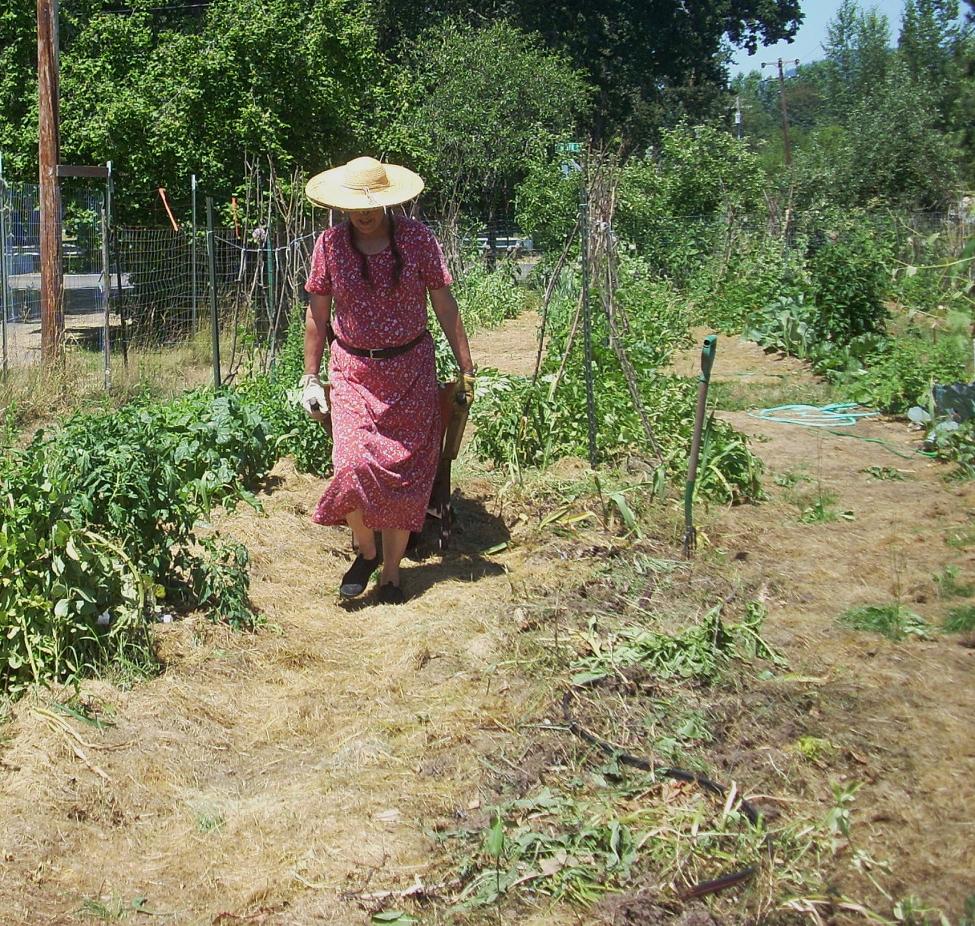
When we lived for eight years in the outskirts of one small city and I worked in the larger city across the river, I often biked to work along established bicycle routes and across the wide river on a bike bridge, a scenic round trip of some sixteen miles. In heavier weather, I took the bus.

Bodhidharma splits up practice in much the same way. If wall-gazing does it for you, he says, gaze away! It is, when you do it, the entirety of practice. On the other hand, everything else is waiting for you as practice: the whole of life's activity. One of my hardest-working spiritual teachers, a Hutterite, Barbara Maendel, put it drolly when handing out our farm chores from a seemingly endless list: "a change is as good as a rest."

Zazen is the bicycle. Just get on it and go. In heavier weather, a change is good too. Just get on the bus and go.

Life practice is the bus. If you're sitting in the doctor's waiting room, sure, you can work on your stillness, but also there's the check-in and the visit, which may provide vexations. The arriving and the departing may stress as well -- that near-miss in the parking lot, say. Everything seems to push and pull. To deal with these as Dharma practice, form Dharma life habits.

Bodhidharma breaks life practice into four parts: absence of resentment, acceptance of circumstances, absence of craving, and accord with Dharma. 

To form the habit of not resenting can be a big change in lifestyle for many of us. It means accepting circumstances just as they are, with no craving for them to be any different. That doesn't mean don't swim when you fall into the water, it just means don't spend your swimming energy on uselessly grieving the fall or being angry that you were bumped. Swim. 

Accord with Dharma means embodying Buddha's truth by living the six wisdoms (paramitas). Six tools are available to bring us to the place of non-resentment: giving, ethical discipline, patience, effort, meditation, wisdom.

"Giving" is practice in being kind, a way of cultivating a cooperative, productive and peaceful community.

"Ethical discipline" is self-regulation: holding anger, greed and delusion in check, we foster a cooperative, productive and peaceful community.

"Patience" is practice in accepting circumstances as they are; it's rooted in letting go of the past and especially the future, allowing the community's cooperation, productivity and peace to unfold unforced.

"Effort" here is not the willful struggle that might be envisioned by the ascetic, but the steady self-application to practice that leaves behind the constructed self composed of greed, anger and delusion. This too benefits the community.

"Meditation" in the midst of life practice is that stillness in the doctor's waiting room, increasingly expanding into the visit and the coming and going. You may call it equanimity. It is beneficial to the community.

"Wisdom" here is "prajna," an ongoing appreciation of the ontological truth of the Dharma: "thusness." An insight into thusness is provided by the idea of dependent origination: all things are what they are together, in the same nowness, and nothing exists separately. As our illusion of separateness fades, our actions spring from this realization, and we benefit the community.

shonin painted six rocks, each with a paramita, as mnemonic devices. What, she's 76.


To see Dogen's practical application of the principle of life practice, samu practice, read his "Instructions to the cook," Tenzo Kyokun.

If you only have wild grasses with which to make a broth, do not disdain them. If you have ingredients for a creamy soup do not be delighted. Where there is no attachment, there can be no aversion. Do not be careless with poor ingredients and do not depend on fine ingredients to do your work for you but work with everything with the same sincerity. If you do not do so then it is like changing your behaviour according to the status of the person you meet; this is not how a student of the Way is. (tr. Anzan Hoshin and Yasuda Joshu Dainen)

Hongzhi sums up. "You must purify, cure, grind down, or brush away all the ten­dencies you have fabricated into apparent habits. Then you can reside in the clear circle of brightness."

The bicycle in good weather carried me to the entrance of the building where I worked. I arrived exercised and healthy, ready to benefit the community.

The bus, in heavy weather, stopped right in front of the same building. I arrived rested, composed, ready to benefit the community.

Not saying I always rose to the occasion. But that clear circle of brightness -- it's a thing. We should all look into it.

 -- shonin 


Thursday, March 13, 2025

The "thusness" zone

(Continued from Just Fail)

In response to the four sights, Buddha formulates four truths, the first three being about the first three sights, and the fourth being a critical response to the fourth sight. Rather than be a self-punishing sadhu, just join the sangha -- the community of those embodying the dharma, that is responding to reality realistically. He details the ways of doing this: see rightly, resolve thoroughly, speak sense, behave, work honorably, see it all through to an honorable conclusion, bear in mind those things that matter, and sit, stand, walk, and lie down with a centered stillness.

These are mutually supporting and overlapping activities, the positives that are later joined by prohibitions that arose as needed because human nature, embedded within the ongoing system of greed, anger and ignorance, finds these positives difficult to apply to all of one's life.

Chinese monks and nuns found that it helped to go and spend some time alone, and so adapted some of Taoism's hermetic culture -- "leaving behind the rest dust (of the cities)" -- for years or even decades in many cases. But the eight practices were intended to be carried out in the midst of society, as the point of behaving well is to behave well toward others.

Bodhidharma is said to have similar instructions in a document know as the "Two Entrances and Four Practices."

In it, he notes that an intellectual appreciation of Dharma, combined with zazen, can serve as a way into the life of thusness, but he seems to prefer the other Entrance: four recommended practices of what could be called applied Dharma. These are: acceptance of suffering, such as from injustices, acceptance of circumstances as we find them, ignoring cravings, and according with Dharma, that is to say, practicing the six perfections. Those are: giving, ethics, patience, effort, meditation, wisdom.

I sometimes think all these instruction, especially if one throws in the Vinaya or at least the precepts, amount to busywork to stave off the three poisons.

Buddha's early instructions, and Bodhidharma's instructions, if followed, certainly seem to be capable of bringing one's life away from the worst effects of these poisons and into the "thusness" zone.

If we need to put it in less verbose form, though, I think that can be done.

 -- shonin 

(To be continued)


Wednesday, June 12, 2013

Right action can be all eight spokes of the wheel


An analysis of the four truths and eightfold way of Buddhism as a unified concept which could be expressed as Right Action.

Primum non nocere, a medical directive, means, "First, do no harm."

It's rough out there.

That it's rough out there can be taken as a given. Some of us are insulated from the consequences of inappropriate action through the inequitable accumulation of resources, but the effect is temporary and I think a kind of self-harm accrues, to ourselves and our loved ones. Certainly harm comes to others.

Hence: "it's rough because we (whether ourselves or others) want things to be different than they are." We suffer when we have expectations or unrealistic intentions. Others suffer when we attempt, through action, to enforce our expectations. We take an inappropriate action.

"We can change our behavior," that is, we can learn to select appropriate actions.

So, Right Action could serve as the key concept drawing the Buddhist and Permaculture toolboxes together.

Right view could be taken as observe clearly, which is a kind of action.

Right aspiration could be taken as a kind of action, in which one connects observation to volition. Separating appropriate desires from inappropriate desires, with an intent to manifest the appropriate desires, is an internal activity, but an important one. "Cessation from all desires" is a misleading concept in this context, as it lacks the qualifier "appropriate." If one fails to desire to breathe, no right actions will follow.

Right speech is certainly an action, through the choice to say or not say, as needed. A friend often says: before speaking, ask yourself, "is it kind? Is it true? Is it necessary?"

Hence, right action. And is your action kind? Is it true (correct)? Is it necessary? These three combined are what is meant by "appropriate" as used here.

Right livelihood is right action in the sense of "obtain a yield." If benefits accrue to you and others by your actions you already have right livelihood. Do not think this is limited by or to the earning of money.

Right action must be carried out, not merely thought of. One applies one's energy to the task. So right effort is about action.

Right mindfulness, also, does not just happen. To clear away obstacles and focus, though it occurs in the mind, is an internal action without which appropriate external activity will not occur. I've expressed this dualistically, but is not all movement by living things the evidence of mind at work?

Right concentration is what occurs in meditation, i..e., the suppression of distractions so as to observe directly. So we have come full circle in this exercise, as the finding that it's rough out there is an observation. You have taken the action to find that out, to discover the cause (which can be boiled down to selfishness) and the cure (which can be boiled down to selflessness).

"Ethics" need not be taught in a university, nor commanded in a church (that's "morality," a different kind of animal). It is as simple as breathing. Want happiness? When you rise up in the morning, set your face toward the doing of right action, that is, whatever is kind, true, and necessary.


...the four noble truths include the eightfold path, which instructs us in how to live and embody dharma in every part of life through right view, right speech, right action, right livelihood, right mindfulness, and so forth. The Buddha taught the community of followers hundreds of ways to practice based on these truths. And in thousands of years of practice these skillful means have grown. We can draw upon them all in support of awakening.

-- Jack Kornfield


(to be continued)

Sunday, May 19, 2013

Buddhism and Permaculture: A pair of ethics toolboxes

This may contain: an image of a garden with plants growing out of the planter and on top of it


The following can be regarded as a compatible pair of ethics toolboxes for designing a life. 

The first is derived from Buddhism. I find its core survives Occam's razor. Its basics are: four truths, which descended from Siddhartha Gautama's contemplation of the Four Sights. And: eight ways for those truths to be manifested in your life. I tend to take this to mean the young man saw a sick person, an old person and a dying person (entropy) and prescribed, within the ontological bounds available to him, negentropic activity as its antidote.

https://1.bp.blogspot.com/-vvAfQawoj44/Sk_fhmVbdxI/AAAAAAAABJ8/N9jENzsQOag/s1600/014.JPG
Your author in skinnier days.


Truth one: it's rough out there (second law of thermodynamics). 

Truth two: it's even rougher because we (whether ourselves or others) want things to be different than they are (as if there were no such law).

Truth three: We can change our own behavior, so that things are less rough for us, at least internally (and perhaps slow some of the entropy for ourselves and others through wisdom).

Truth four is a simple method for cultivating these behavioral changes. Here is the method with its eight parts -- they are interrelated; are really aspects of one thing, but broken down for utility.

  1. Right view. See what's happening.

  2. Right aspiration. Care about the things that matter, not the things that don't. Notice the things that matter are not things (esp. as in "owning" "possessions").

  3. Right speech. When communicating with others, delete whatever would hinder them from discovering the truths and using this method. For example, hurtful snark.

  4. Right action. Do not do unto others what you would not want done to you. Heard that before?

  5. Right livelihood. Do not do for a living that which would hinder others from discovering the truths and using this method. Example: fracking engineer. Example: bankster. The best occupations are probably smallholder and the crafts that support smallholders, along with infrastructure workers and the health professions, preferably preventive care. I would include teaching, but prefer it in the form of apprenticeships over large school and university systems.

  6. Right effort. Conducting the parts of the method with due diligence.

  7. Right mindfulness. Clarity of thought concerning the truths, the method and their goal of non-harm.

  8. Right concentration. To achieve clarity of thought, discipline the mind. Simply refusing to load it up with extraneous chatter (from television or Facebook, for example) is a start. I attend virtual Soto Zen Buddhist events. Your mileage may vary.

The second toolbox is the Permaculture Design principles, as formulated by David Holmgren in Permaculture: Principles and Pathways Beyond Sustainability (2002). I find them to be, ultimately, the same box differently adumbrated.

The core ethics are generally expressed as "earth care, people care, and fair share." This could be regarded as "help others slow their entropy." So I find both Buddhism and Permaculture, as ethical systems promoting simple living and reciprocity, to be attempts to build a nonfictional applied philosophy of negentropism.

The ethics are applied in, usually, twelve kinds of activities usually called principles.

  1. Observe and Interact. By taking the time to engage with nature we can design relevant solutions.

  2. Catch and Store Energy. Developing systems to collect resources when abundant, we can use them in need.

  3. Obtain a yield – Ensure that you are getting useful rewards from your work.

  4. Apply Self Regulation and Accept Feedback – Efficient or resilient systems require noting and correcting inefficient or nonresilient practices.

  5. Use and Value Renewable Resources and Services – as opposed to non-renewable resources.

  6. Produce No Waste – “Waste not, want not.”

  7. Design From Patterns to Details – Observe patterns in nature and society. Test their appropriateness broadly, rather than losing yourself in detail.

  8. Integrate Rather Than Segregate – By putting the right things in the right place, relationships develop, creating efficiencies and resiliences.

  9. Use Small and Slow Solutions – Small is beautiful.

  10. Use and Value Diversity – “Don’t put all your eggs in one basket” -- be resilient.

  11. Use Edges and Value the Marginal – These are often the most valuable, diverse and productive elements in the system.

  12. Creatively Use and Respond to Change – We can have a positive impact on inevitable change by carefully observing and then intervening at the right time.

The principles are applied in seven "domains" that have been elucidated. These: The Natural Realm, Building(s), Tools (Technology), Education/Culture, Health (Well-Being), Economics ("as if people mattered"), Governance (participatory democracy preferred).

I'm aware that some leaders in Buddhism and Permaculture have historically and have continued to fall short of the ethics enumerated here, particularly in the treatment of women, and of the colonized by colonizers, by men in positions of authority. So what's new?  I'm going to practice as long as I see the utility of practice; that will at least be one less potential predator in the world, to the extent of my ability. Both Buddhists and Permaculturists practice as exemplars.

You are here for only a moment, less than a moment in the universe's time. Why not simply clear the mind, open the "heart," open the hands, be for and with and not against?

Natural farming, the true and original form of agriculture, is the methodless method of nature, the unmoving way of Bodhidharma. Although appearing fragile and vulnerable, it is potent for it brings victory unfought; it is a Buddhist way of farming that is boundless and yielding, and leaves the soil, the plants, and the insects to themselves. -- Masanobu Fukuoka


(To be continued)