

The following can be regarded as a compatible pair of ethics toolboxes for designing a life.
The first is derived from Buddhism. I find its core survives Occam's razor. Its basics are: four truths, which descended from Siddhartha Gautama's contemplation of the Four Sights. And: eight ways for those truths to be manifested in your life. I tend to take this to mean the young man saw a sick person, an old person and a dying person (entropy) and prescribed, within the ontological bounds available to him, negentropic activity as its antidote.
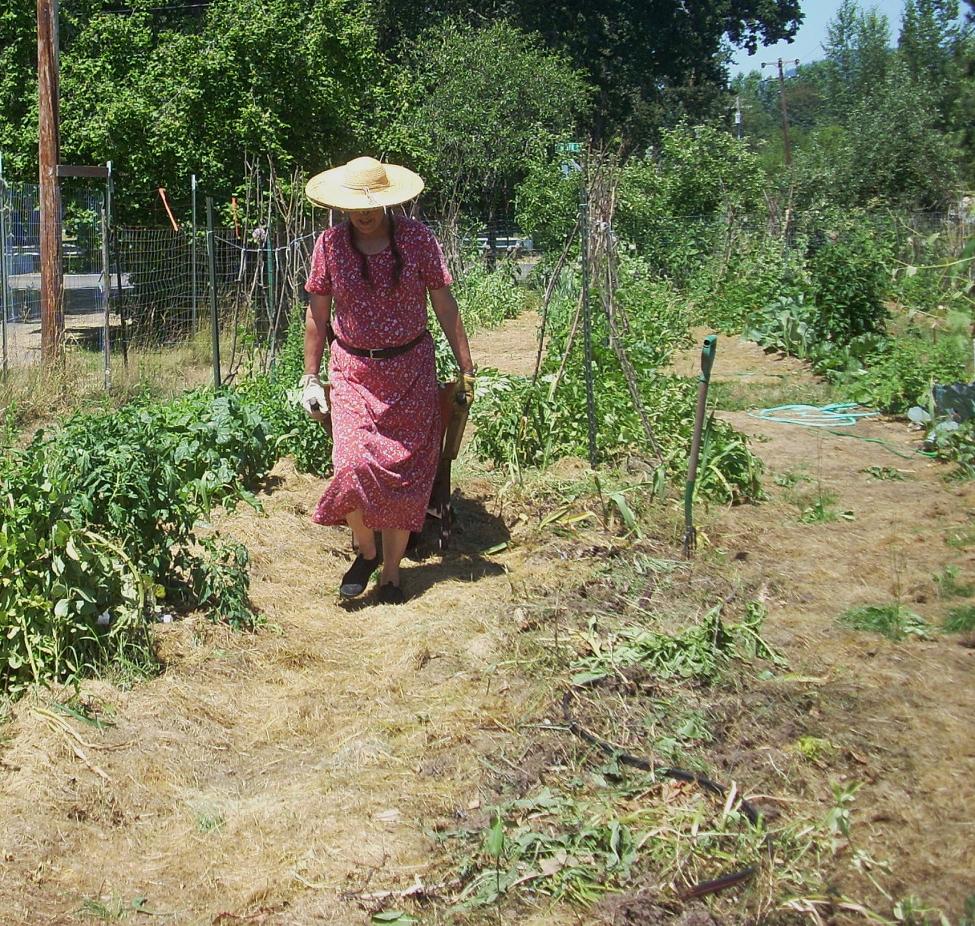 |
| Your author in skinnier days. |
Truth one: it's rough out there (second law of thermodynamics).
Truth two: it's even rougher because we (whether ourselves or others) want things to be different than they are (as if there were no such law).
Truth three: We can change our own behavior, so that things are less rough for us, at least internally (and perhaps slow some of the entropy for ourselves and others through wisdom).
Truth four is a simple method for cultivating these behavioral changes. Here is the method with its eight parts -- they are interrelated; are really aspects of one thing, but broken down for utility.
-
Right view. See what's happening.
-
Right aspiration. Care about the things that matter, not the things that don't. Notice the things that matter are not things (esp. as in "owning" "possessions").
-
Right speech. When communicating with others, delete whatever would hinder them from discovering the truths and using this method. For example, hurtful snark.
-
Right action. Do not do unto others what you would not want done to you. Heard that before?
-
Right livelihood. Do not do for a living that which would hinder others from discovering the truths and using this method. Example: fracking engineer. Example: bankster. The best occupations are probably smallholder and the crafts that support smallholders, along with infrastructure workers and the health professions, preferably preventive care. I would include teaching, but prefer it in the form of apprenticeships over large school and university systems.
-
Right effort. Conducting the parts of the method with due diligence.
-
Right mindfulness. Clarity of thought concerning the truths, the method and their goal of non-harm.
-
Right concentration. To achieve clarity of thought, discipline the mind. Simply refusing to load it up with extraneous chatter (from television or Facebook, for example) is a start. I attend virtual Soto Zen Buddhist events. Your mileage may vary.
The second toolbox is the Permaculture Design principles, as formulated by David Holmgren in Permaculture: Principles and Pathways Beyond Sustainability (2002). I find them to be, ultimately, the same box differently adumbrated.
The core ethics are generally expressed as "earth care, people care, and fair share." This could be regarded as "help others slow their entropy." So I find both Buddhism and Permaculture, as ethical systems promoting simple living and reciprocity, to be attempts to build a nonfictional applied philosophy of negentropism.
The ethics are applied in, usually, twelve kinds of activities usually called principles.
-
Observe and Interact. By taking the time to engage with nature we can design relevant solutions.
-
Catch and Store Energy. Developing systems to collect resources when abundant, we can use them in need.
-
Obtain a yield – Ensure that you are getting useful rewards from your work.
-
Apply Self Regulation and Accept Feedback – Efficient or resilient systems require noting and correcting inefficient or nonresilient practices.
-
Use and Value Renewable Resources and Services – as opposed to non-renewable resources.
-
Produce No Waste – “Waste not, want not.”
-
Design From Patterns to Details – Observe patterns in nature and society. Test their appropriateness broadly, rather than losing yourself in detail.
-
Integrate Rather Than Segregate – By putting the right things in the right place, relationships develop, creating efficiencies and resiliences.
-
Use Small and Slow Solutions – Small is beautiful.
-
Use and Value Diversity – “Don’t put all your eggs in one basket” -- be resilient.
-
Use Edges and Value the Marginal – These are often the most valuable, diverse and productive elements in the system.
-
Creatively Use and Respond to Change – We can have a positive impact on inevitable change by carefully observing and then intervening at the right time.
The principles are applied in seven "domains" that have been elucidated. These: The Natural Realm, Building(s), Tools (Technology), Education/Culture, Health (Well-Being), Economics ("as if people mattered"), Governance (participatory democracy preferred).
I'm aware that some leaders in Buddhism and Permaculture have historically and have continued to fall short of the ethics enumerated here, particularly in the treatment of women, and of the colonized by colonizers, by men in positions of authority. So what's new? I'm going to practice as long as I see the utility of practice; that will at least be one less potential predator in the world, to the extent of my ability. Both Buddhists and Permaculturists practice as exemplars.
You are here for only a moment, less than a moment in the
universe's time. Why not simply clear the mind, open the "heart," open the hands, be for and with and not against?
Natural farming, the true and original form of agriculture, is the methodless method of nature, the unmoving way of Bodhidharma. Although appearing fragile and vulnerable, it is potent for it brings victory unfought; it is a Buddhist way of farming that is boundless and yielding, and leaves the soil, the plants, and the insects to themselves. -- Masanobu Fukuoka